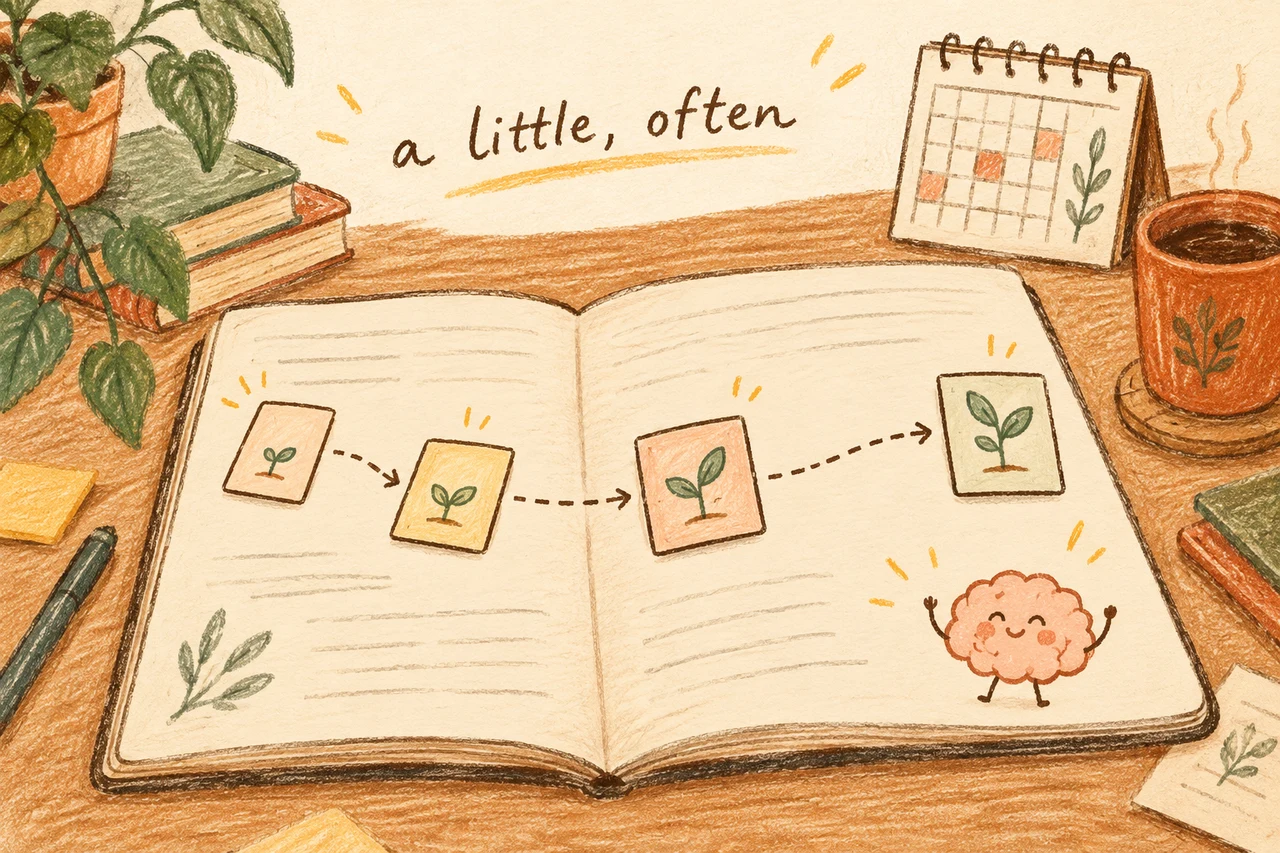
There’s a very specific kind of confidence you get from rereading a page five times. The words look familiar. The diagram looks familiar. Even the little coffee stain looks familiar.
Then you close the book.
Nothing. Just the coffee stain.
That gap between “yeah, I know this” and actually being able to explain it is why spaced repetition caught my attention. The name sounds like something a productivity guy would sell you in a course. The actual idea is almost annoyingly simple: learn something, leave it for a while, then try to remember it again. Keep coming back, with gaps between visits.
I like that it doesn’t ask you to become a completely different person. You can still have a messy desk and seventeen tabs open. You just need to come back to a few questions.
Wait, what are we spacing out?
The reviews. Not your attention, although mine does that for free.
Say you learn ten Spanish words today. Instead of repeating all ten for an hour and abandoning them until the exam, you try them tomorrow. Then a few days later. Then a bit further down the line.
If a word comes back easily, you can leave a longer gap. If you blank on it, check the answer and give it another go sooner. Different words can end up on different schedules. You don’t have to keep dragging the easy ones along with the difficult ones.
The important part is that time passes between reviews. You’re giving yourself another chance to retrieve something after it’s stopped being fresh in your head.
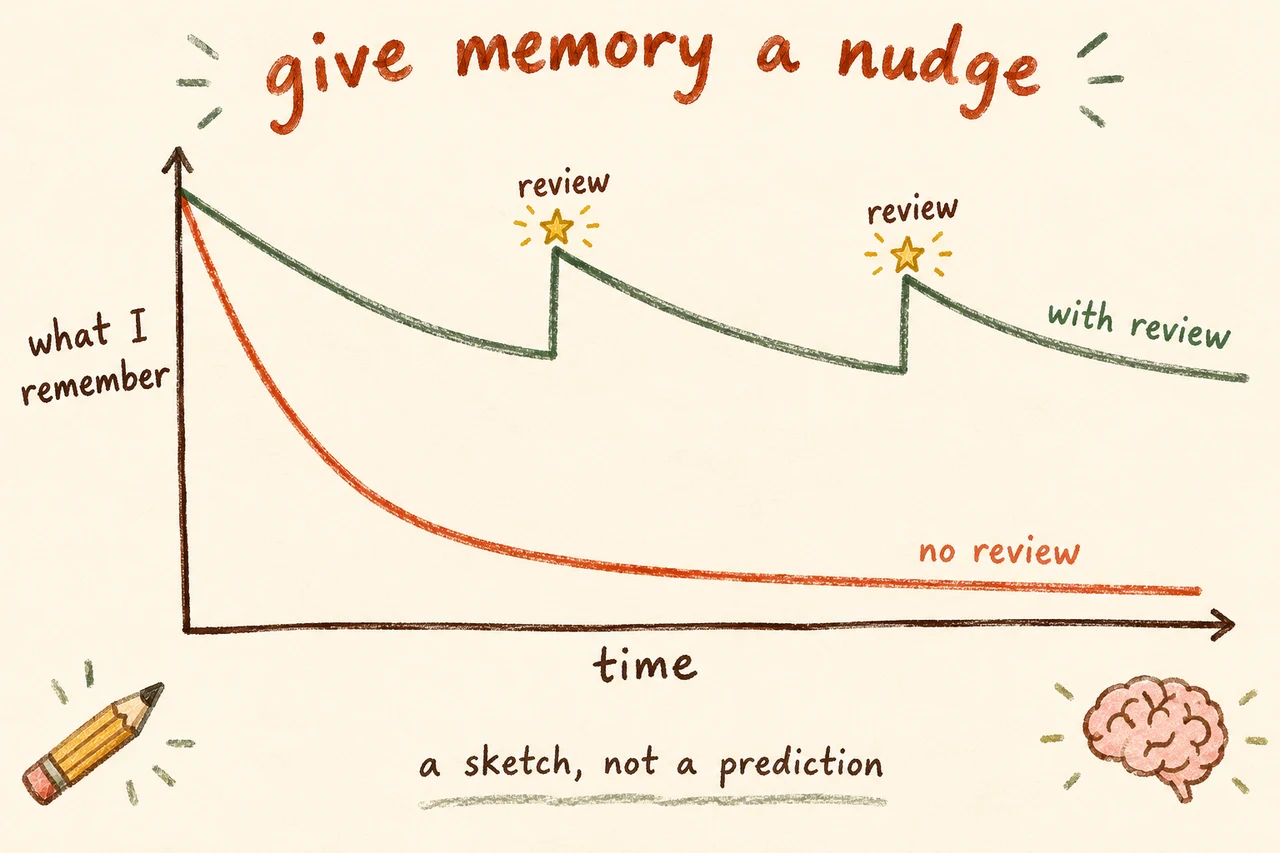 A rough sketch of memory fading over time, with reviews giving it a nudge. It illustrates the idea; it doesn’t predict anyone’s exact memory.
Research on spacing backs up the broad idea of revisiting material across separate sessions. It also suggests that the useful gap depends on how long you need to remember something. That’s why I’m suspicious of any timetable claiming to be perfect for every subject and every person. Cepeda and colleagues’ study is a good place to read more about that.
The slightly awkward bit: close the notes
Spaced repetition tells you when to revisit something. Active recall is about what you do when you get there.
Try answering before you look.
Not “would I recognise the answer if it appeared in front of me?” Actually say it, write it, draw it, or solve it. You might stare at the wall for a few seconds. That’s allowed. The wall is part of the process now.
Then check. If your answer was wrong or incomplete, correct it. If you don’t understand the answer, go back to the explanation instead of memorising a sentence you can’t use.
In Roediger and Karpicke’s experiments, practising recall helped students remember passages better on delayed tests than spending that time restudying them. Rereading made people feel more confident, which is a slightly rude finding, honestly.
“This looks familiar” is a feeling. “I can explain this with the notes closed” gives you something to check.
Please don’t put an entire chapter on one card
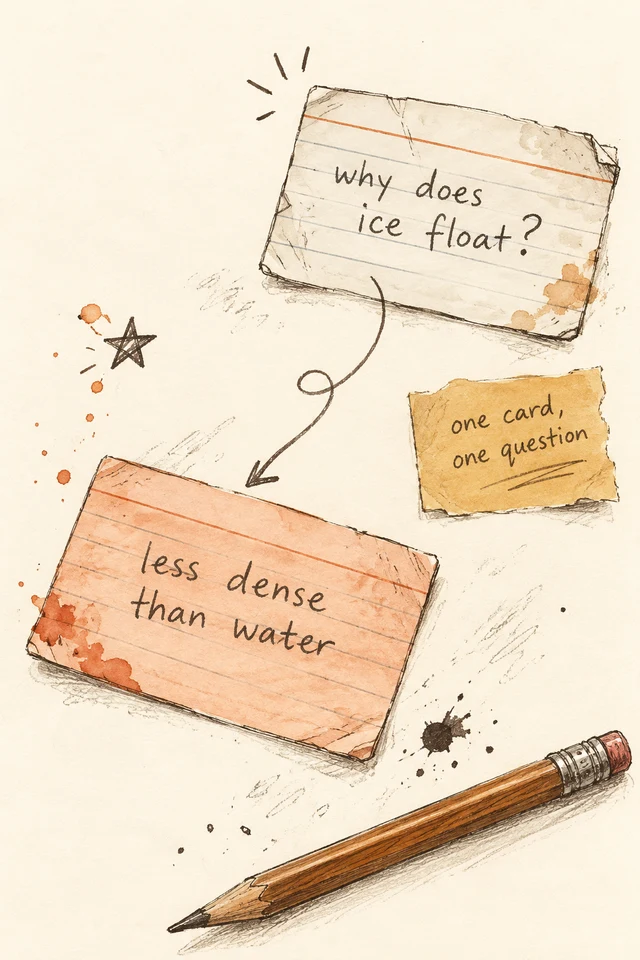 One question on the front: why does ice float? One short answer on the back: it is less dense than water.
Flashcards make this easy, but only if the question is small enough to answer.
“Explain everything about water” is a terrible card. Where do you even start? “Why does ice float on liquid water?” gives you one clear thing to retrieve: ice is less dense than liquid water.
You can make another card asking why it’s less dense. That answer can cover the more open structure formed by hydrogen bonds when water freezes. Two questions, two chances to find out where you’re stuck.
For a PDF or lecture handout, I’d start with one short section. Read it properly, pick out five useful questions, and check each answer against the source. You don’t need a card for every sentence. A deck with 400 cards you avoid opening is an impressively organised problem.
Keep the answers short enough to check honestly. If you got half an answer, count that as something to work on. “Basically knew it” is a very slippery marking scheme.
And cards aren’t the whole study session. For maths, do actual problems. For essays, practise building an argument. Remembering a formula and knowing when to use it are different things, so give both some time.
A small plan you can actually try
If I were starting today, I’d pick one topic and about ten questions. Here’s a simple experiment:
- Today: understand the topic, make the questions, and try answering them once with the notes closed.
- Tomorrow: try them again. Check every answer, including the ones you feel sure about.
- Day 4: another short review. Bring the difficult questions back sooner if they need it.
- Day 8: try again. Give the easy ones a longer gap next time.
That’s a starting point, not a special sequence of numbers your brain requires. If something is falling apart by tomorrow, shorten the gap. If it’s easy, stretch it. An app can handle those decisions card by card, but paper and a calendar are enough to begin.
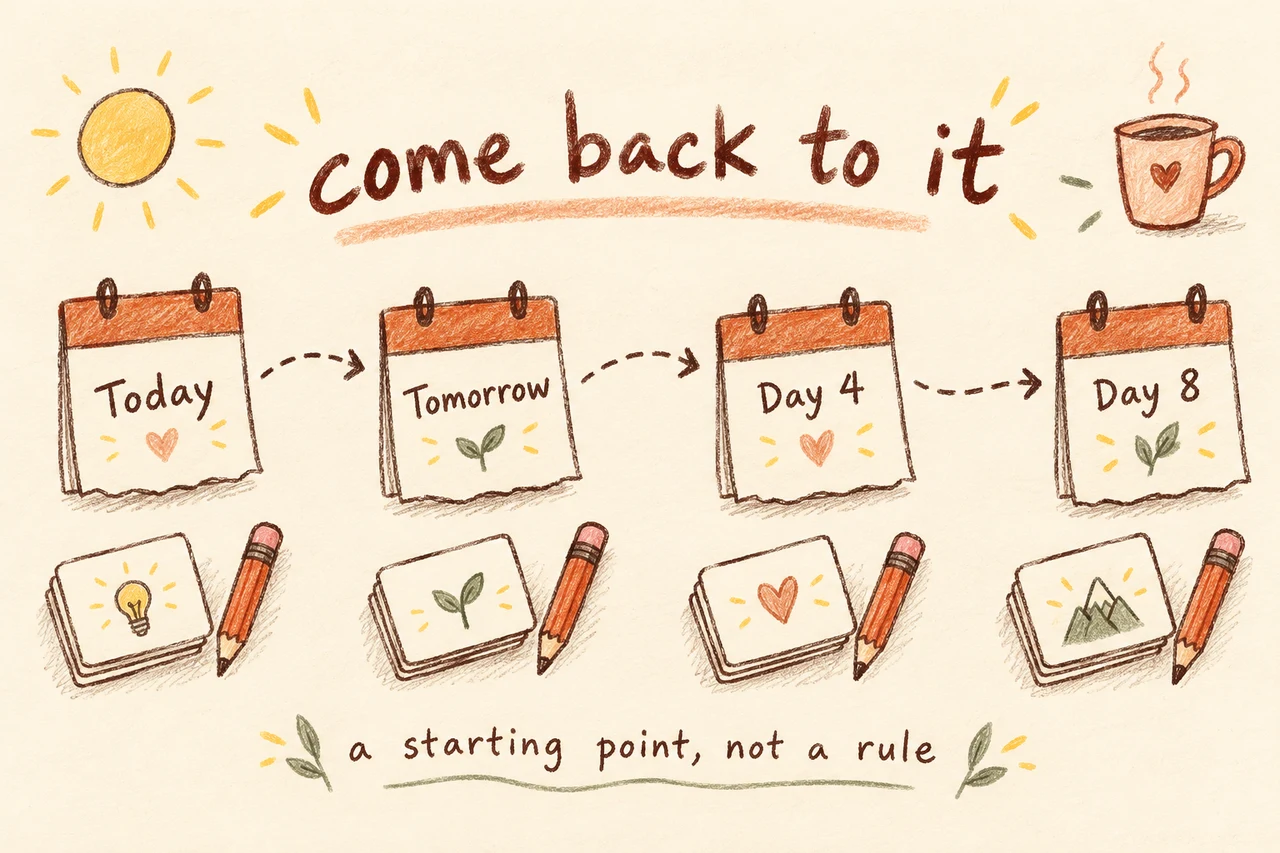 An example review calendar: today, tomorrow, day four and day eight. Adjust the gaps to your answers and your deadline.
I’d also give the session an end. Ten or fifteen minutes is a manageable trial, not a guaranteed amount of study that works for everyone. Stop adding new cards if the reviews are already piling up. Making more questions feels productive; answering the old ones is the bit that’s easier to dodge.
What if the exam is soon? Or I miss a day?
If your exam is in three days, don’t schedule your next review for next month and congratulate yourself on thinking long term. Work with the time you have. Identify the topics you’re weakest on, practise recalling them across the remaining days, and leave room for exam-style questions.
If you have a few weeks, start sooner and spread the returns out. Put the exam date on the calendar, then work backwards to make room for practice papers as well as reviews. You want to find the confusing bits while there’s still time to ask for help.
And if you miss a day, you haven’t broken the technique. Open the deck again. Do a manageable batch. If there’s a backlog, pause the new cards and catch up over several sessions. No punishment marathon needed.
Some questions will keep tripping you up. Before reviewing them for the ninth time, check the card itself. Is the wording vague? Is the answer too long? Are you trying to remember something you never understood? Sometimes the fix is rewriting one bad question.
Where templ fits
templ brings learning notes, flashcards and a study plan together. It brings cards back for review, with easier ones waiting longer and harder ones returning sooner. That can take some of the calendar admin out of this routine.
You still need to attempt the answer and check what you don’t understand. The app can bring the question back. It can’t do the remembering for you.
Honestly, the part of this idea I like most is how small the first step is. You don’t need to rebuild your life on a Sunday night. Pick one thing you want to know next week. Write a few questions about it.
Then leave yourself a reason to come back tomorrow.